In this article:
- Why collagen production drops sharply in women from the mid-30s and accelerates after menopause
- The collagen types most relevant for ageing skin, bones, joints, hair and nails
- What to look for on a label: hydrolysation, peptide weight, daily dose and third-party testing
- Why marine collagen is often the top recommendation for women over 50
- How much collagen per day, when to start, and how long until you see results
Collagen is the scaffolding of the body. It keeps skin firm, cushions joints, lines blood vessels and gives bones their structural integrity. From our mid-20s onwards, the body's natural collagen production starts to slow. By our mid-40s, the decline becomes more visible, and once oestrogen falls during perimenopause and menopause, the drop is steeper still.
The right ingestible beauty routine can help support that shift, which is why so many women in their 40s, 50s and beyond are looking for the best collagen for ageing skin that suits their stage of life.
How collagen changes as women age
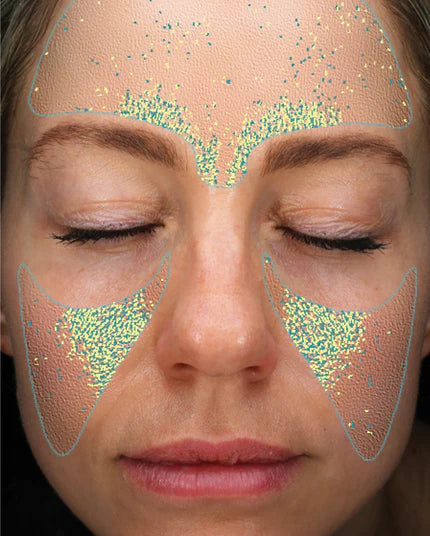
Skin loses roughly 1 to 2 percent of its collagen content per year after menopause, with the steepest losses occurring in the first few years after menstruation completely stops (Brincat et al., 1987). Bone density follows a similar trajectory, since the organic matrix of bone is largely Type I collagen. The visible signs are familiar: fine lines deepen, skin loses bounce, hair feels finer and nails can split more readily. Underneath that, joint cartilage thins and bone strength quietly declines. Supporting collagen synthesis from the inside through targeted nutrition is one of the most evidence-backed ways to soften that trajectory.
Is collagen good for ageing skin?
The short answer is yes. Collagen is good for ageing skin, and the evidence has only strengthened over the past decade. A 2023 systematic review and meta-analysis of 26 randomised controlled trials covering 1,721 participants concluded that hydrolysed collagen significantly improves skin hydration and elasticity, with effects observable across a broad age range (Pu et al., 2023). Earlier work by Proksch and colleagues (2014) found that 2.5 grams of specific bioactive collagen peptides taken daily for eight weeks significantly improved skin elasticity in women aged 35 to 55, with results most pronounced in older participants.
The benefits of collagen for women extend well beyond the surface. Daily hydrolysed collagen has been linked to firmer skin, fewer visible wrinkles, stronger nails and improvements in hair density and thickness. Across all of that work, the picture is consistent: collagen is good for ageing skin, with the strongest results when supplementation is daily and sustained.
Is collagen good for women over 50?
For women over 50, the answer is even more compelling. After menopause, the body is contending with three concerns at once: a sharper drop in skin collagen, a faster rate of bone loss and increasing wear on joint cartilage. A landmark randomised controlled trial in postmenopausal women found that 5 grams of specific collagen peptides taken daily for twelve months significantly increased bone mineral density at the spine and femoral neck, while improving markers of bone formation (König et al., 2018).
This is exactly why collagen is good for women over 50 in a way that ordinary skin supplements often aren't. The same daily dose supports the matrix that underpins skin, bone and connective tissue, all of which need reinforcement at once.
The best type of collagen for ageing skin: what to look for
Not all collagen is created equal. The best collagen for ageing skin comes down to a handful of label-level decisions that quietly determine whether a product will actually work.
Type I collagen
Type I is the most abundant collagen in skin, bones, tendons and nails. It's the type that thins most visibly with age, and it has the most clinical evidence behind it. Marine sources are particularly rich in Type I, which is one reason they tend to lead the conversation around the best collagen for skin elasticity.
Hydrolysation
Hydrolysed collagen is pre-broken into short peptide chains, which is what makes it bioavailable. Whole collagen molecules are too large to be absorbed intact. Look for 'hydrolysed' or 'collagen peptides' on the label.
Low molecular weight peptides
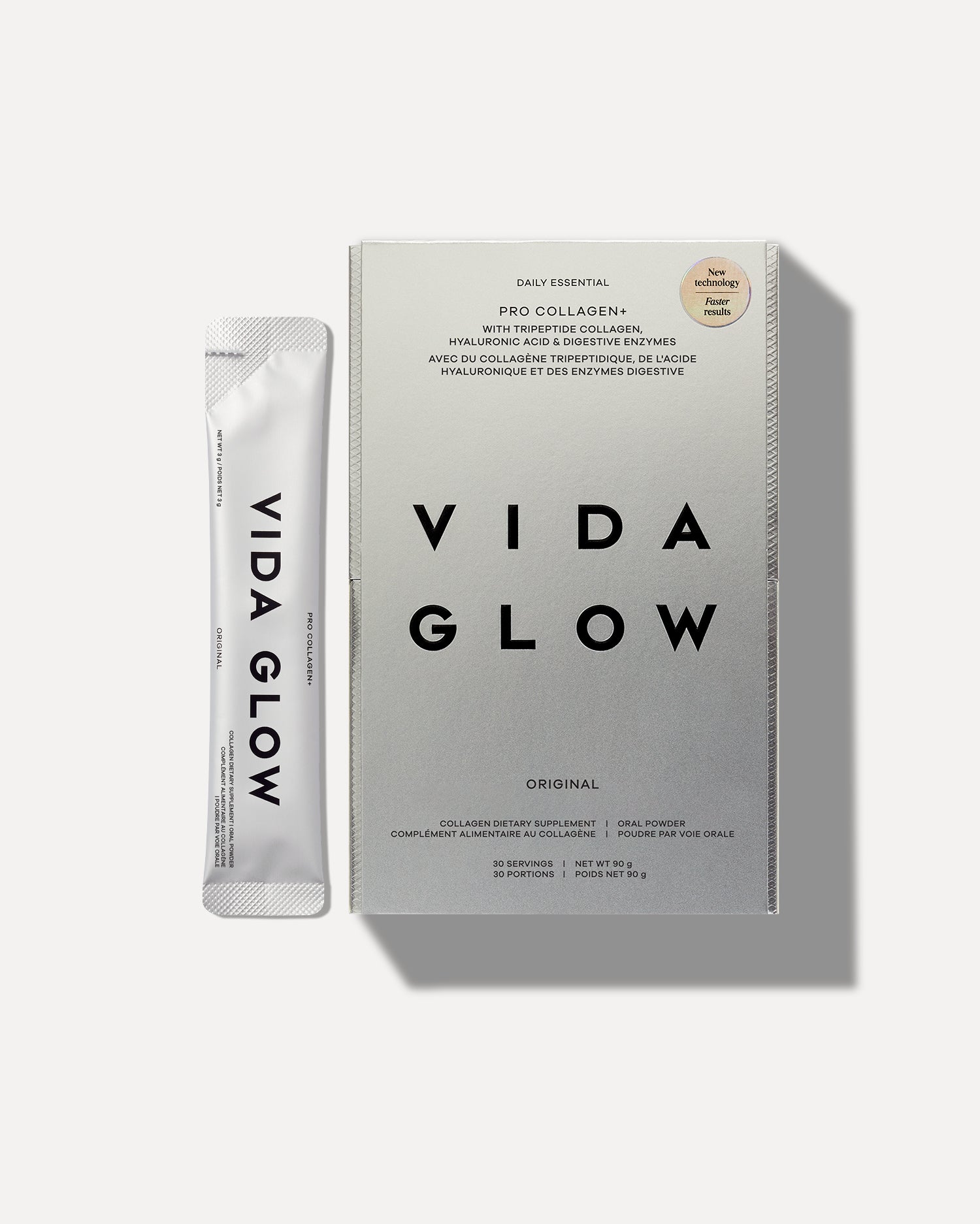
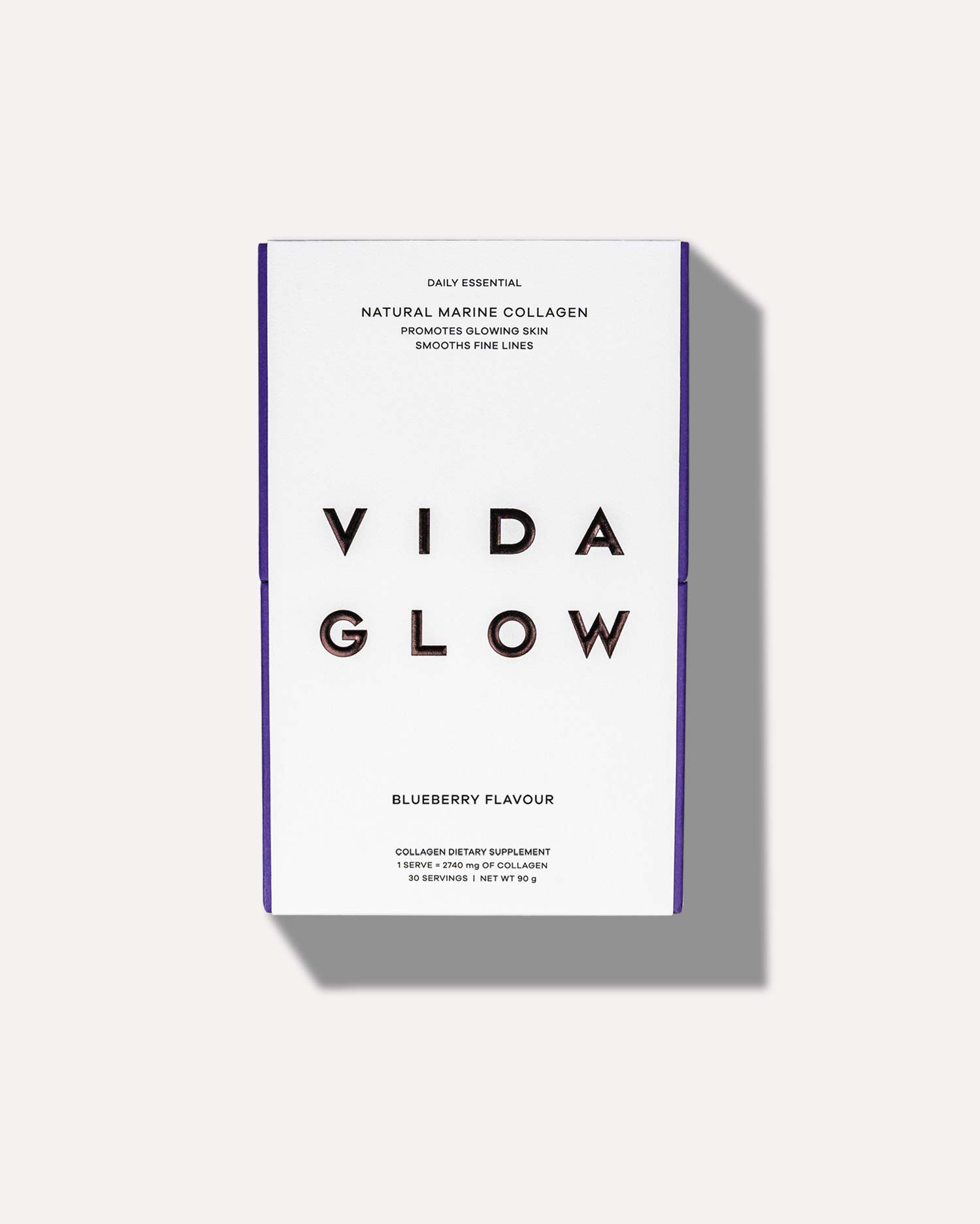
Smaller peptides cross the intestinal wall more efficiently. Vida Glow's marine collagen is hydrolysed to a low molecular weight, and Pro Collagen+ uses tripeptide technology weighing as little as 300 daltons. How those peptides actually reach the bloodstream is worth understanding before you commit to a format.
Clinically supported daily dose
Anywhere from 2.5 to 10 grams per serve, depending on the format and goal. Skin studies often use 2.5 to 5 grams, while bone and joint studies trend toward the higher end.
Third-party testing
A non-negotiable for daily supplementation. Look for batch testing, transparency around sourcing and clean ingredient lists free from unnecessary fillers.
Marine collagen: why it's often the best collagen for women over 50
The best collagen for women over 50 is typically marine, chosen for its high Type I content and excellent bioavailability. The best marine collagen for women is naturally lower in molecular weight than bovine alternatives, which helps explain why these peptides are so well absorbed. For anyone hunting the best collagen for wrinkles and sagging skin, or the best collagen for firming skin, marine is consistently the most studied option in this category.
A randomised, placebo-controlled study by Bolke and colleagues (2019) found that 2.5 grams of specific bioactive collagen peptides taken daily for twelve weeks significantly improved skin hydration, elasticity, roughness and density in women aged 35 and older. These are precisely the markers that change with menopause, which is part of what makes marine collagen the best collagen for women over 50 looking to address visible signs of ageing at the source.
Choosing your format
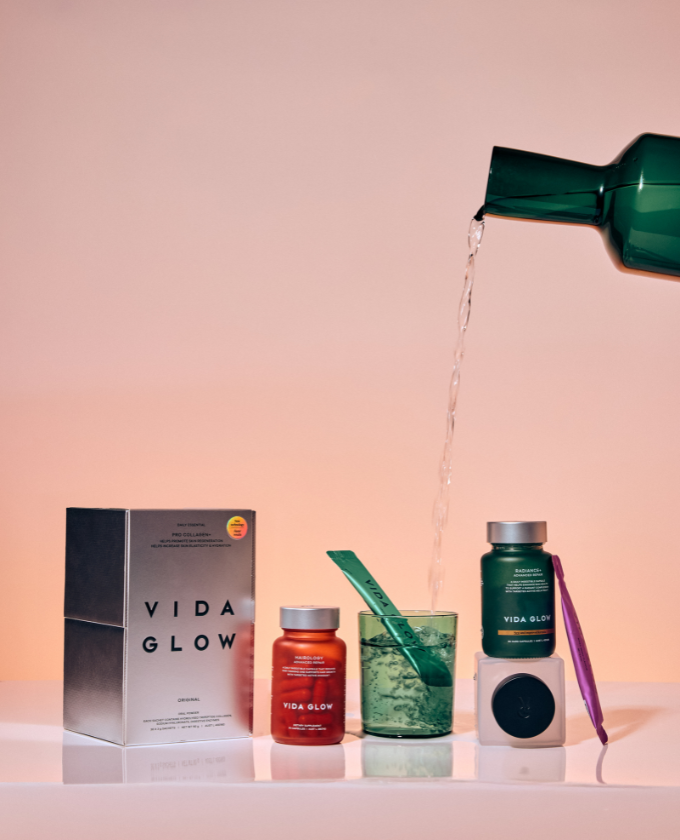
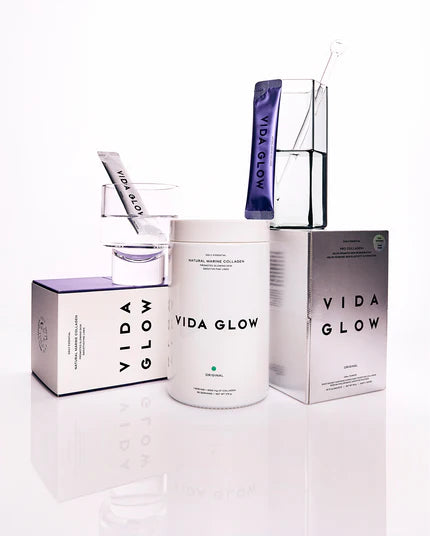
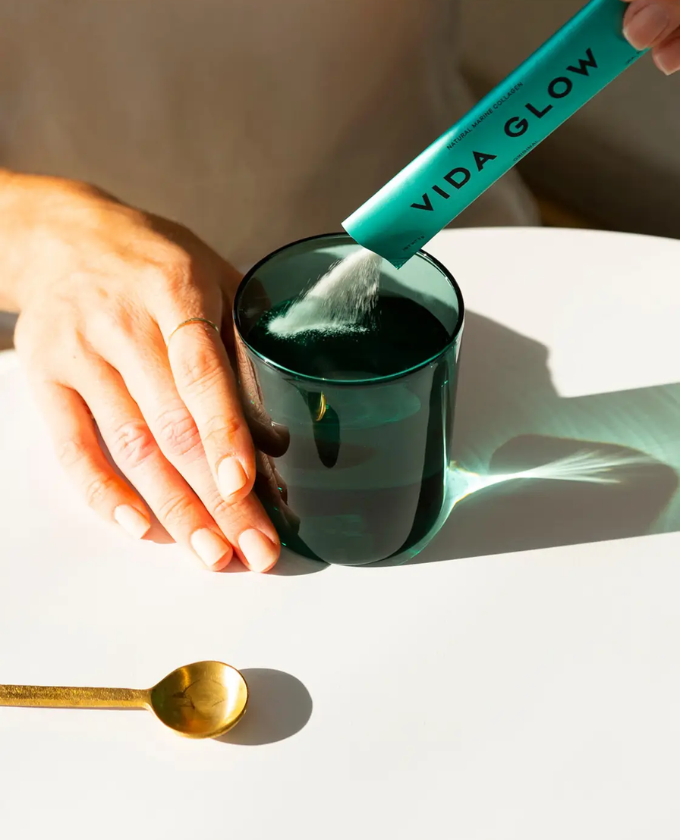
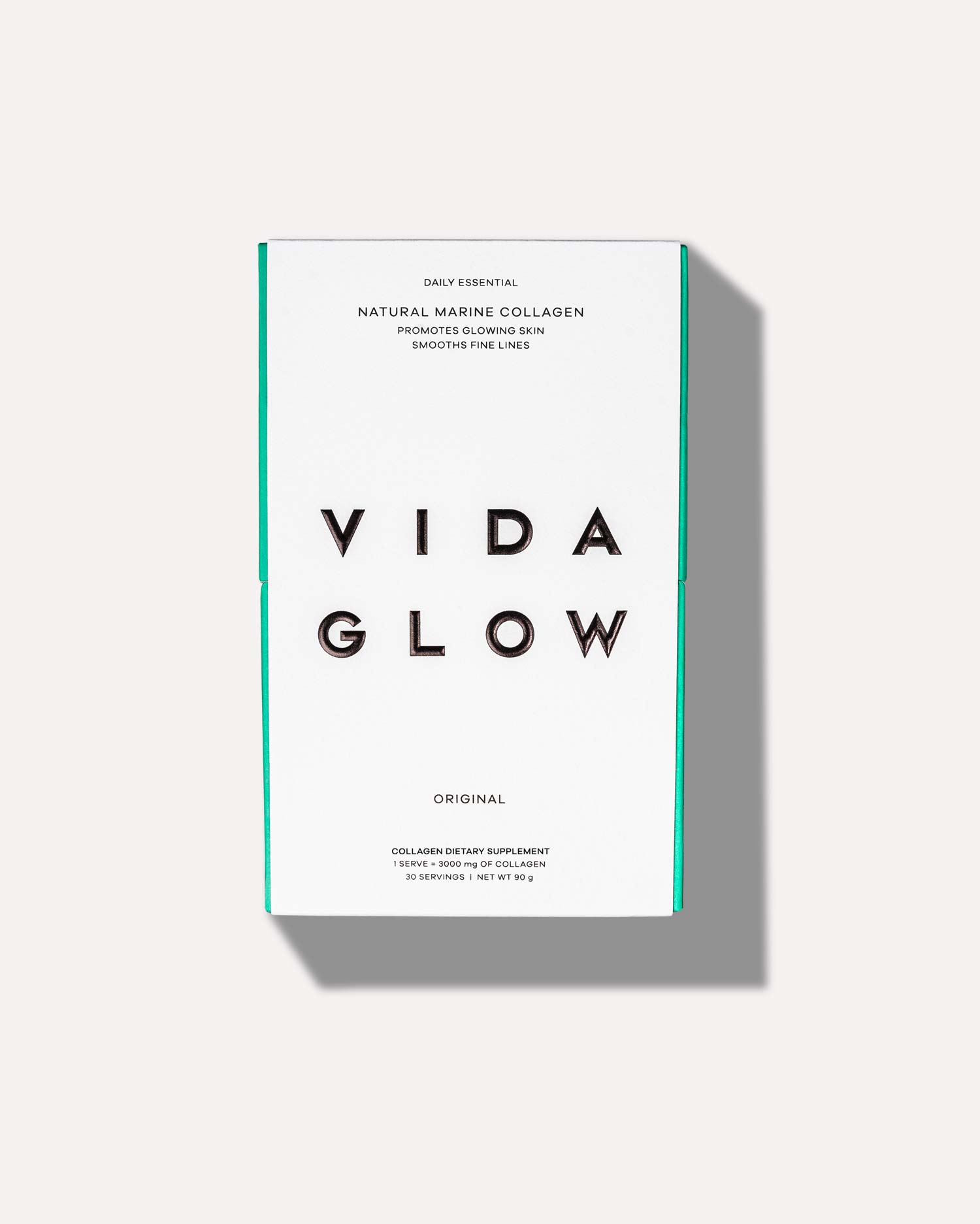
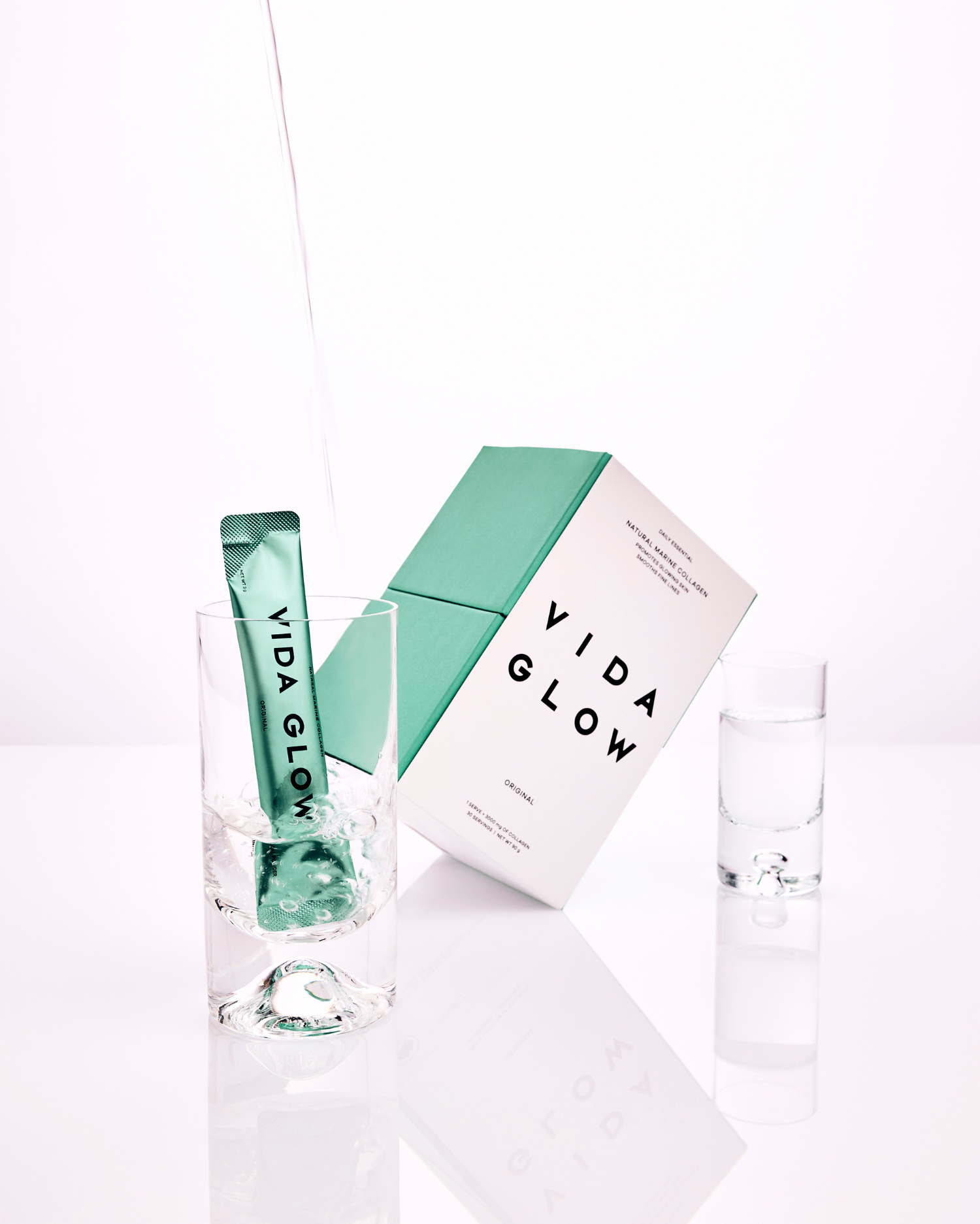
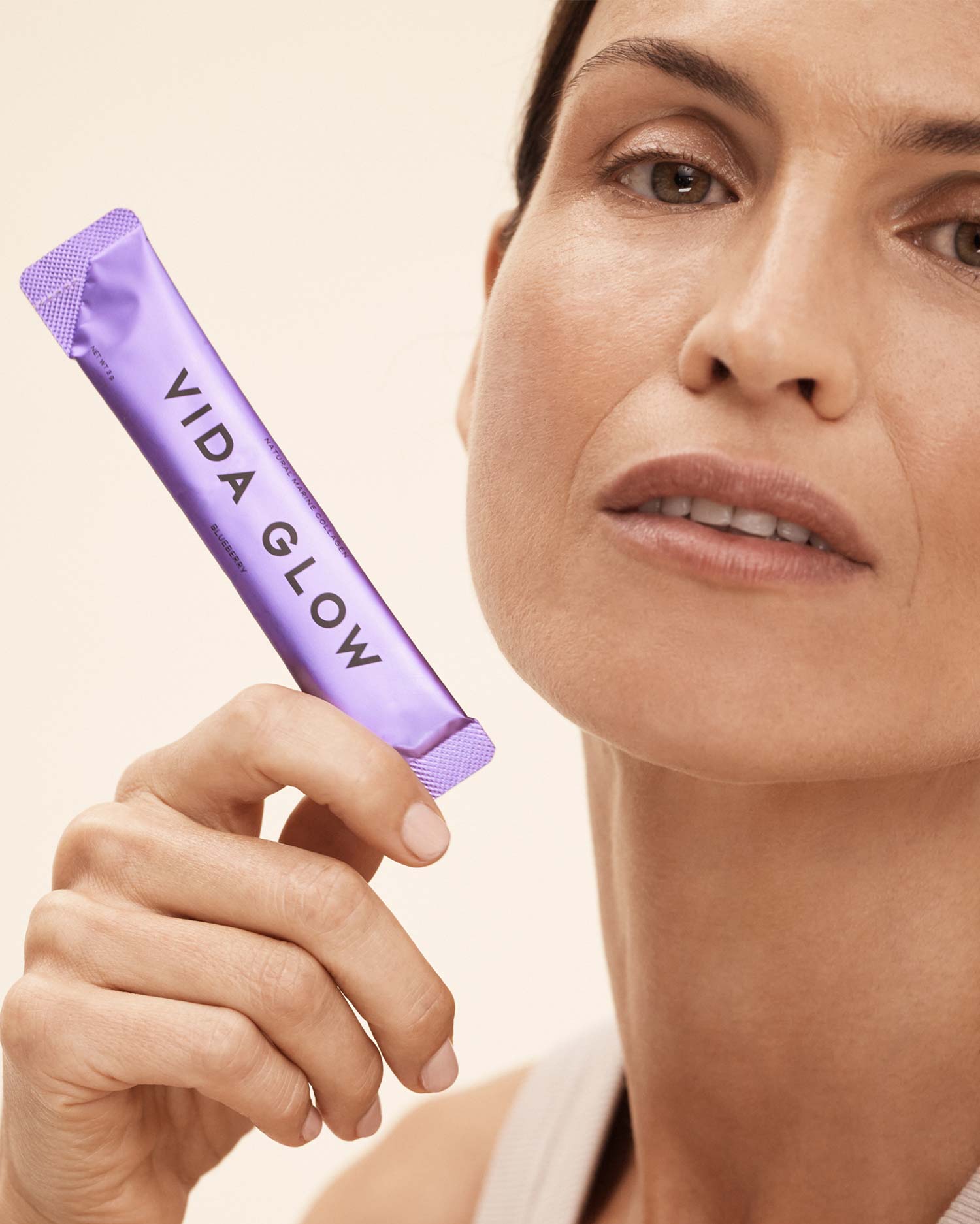
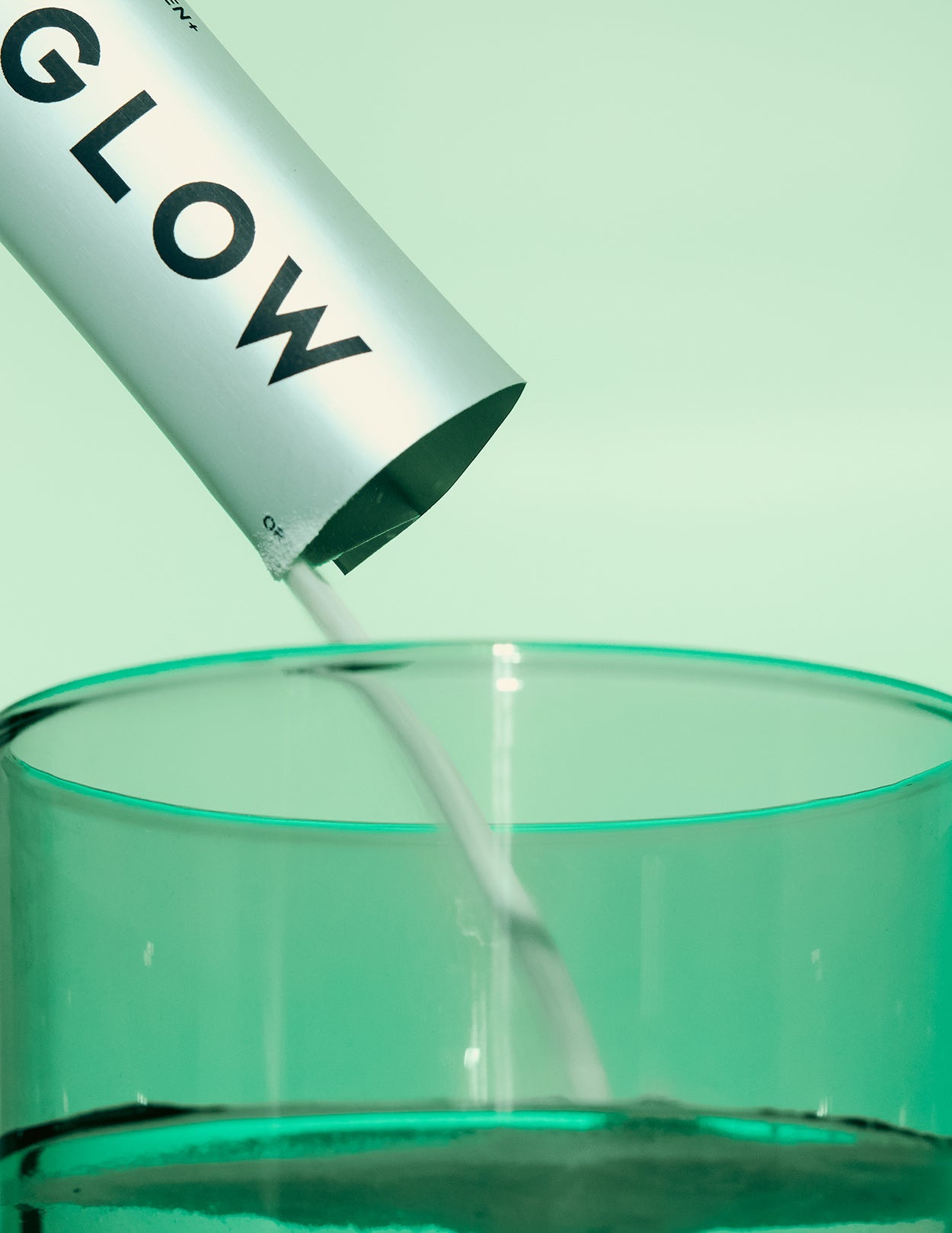
Format follows lifestyle. The best collagen supplements for women include sachets, powders and liquid shots, all built on the same hydrolysed peptide technology. Vida Glow's collagen sachets are single-serve and travel-friendly. Marine collagen powder suits women who already have a smoothie or coffee ritual. For anyone who finds powders fiddly, the best liquid collagen for women skips the mixing step and delivers a measured dose in seconds; Vida Glow's liquid collagen range is formulated for that exact use.
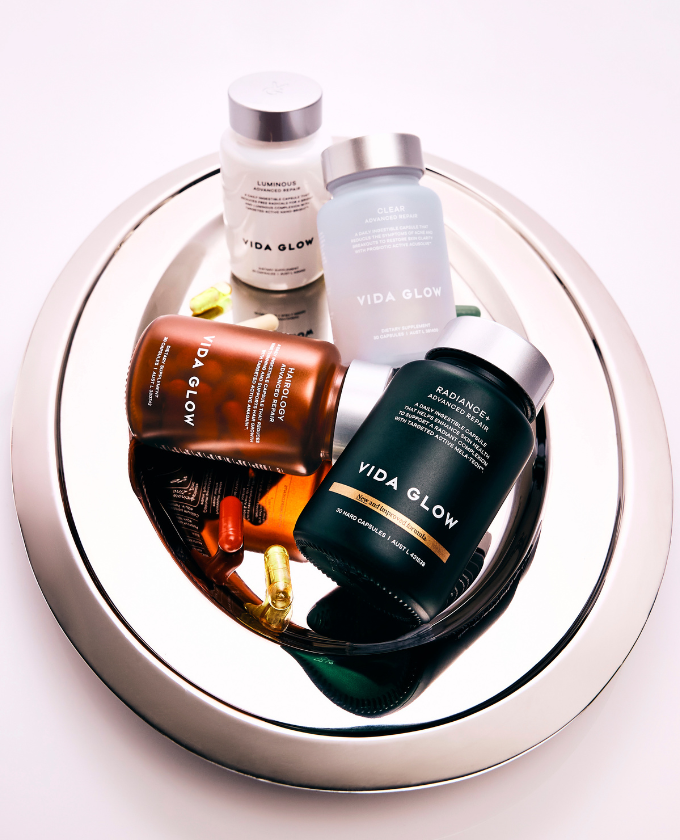
For women who want collagen layered with other targeted nutrients, look at formulations such as hair, skin and nail supplements and broader anti-ageing supplements that pair the peptides with vitamins and botanicals shown to support collagen synthesis.
When should women start taking collagen?
When should women start taking collagen is one of the most common questions, and the answer is earlier than most people think. Natural production starts to slow from the mid-20s, so the best age to start taking collagen is in your late 20s to mid-30s, while prevention is still on the table. That said, it's never too late to begin, and women in their 50s, 60s and 70s see clear benefits once they commit to a daily routine. The collagen peptides benefits for women accumulate over time; earlier starters maintain their reserves for longer, while later starters experience meaningful gains in skin, hair and nail quality.
How much collagen per day for a woman?
How much collagen per day for a woman depends on the goal. Clinical evidence supports 2.5 grams per day for skin elasticity, 5 grams per day for bone density in postmenopausal women and around 10 grams per day for joint and connective tissue support. For most women over 50 looking to support skin, bones and joints together, a daily dose of 5 to 7 grams of hydrolysed marine collagen is a sensible target. Vida Glow's full collagen supplement range is formulated within that clinically supported window.
How long until you see results?
Clinical studies consistently report visible results between 8 and 12 weeks of daily use (Pu et al., 2023). The order of changes tends to follow a pattern: nails strengthen first, then hair quality and growth improve, then skin elasticity and hydration follow. Bone benefits, where measurable, emerge over a longer six to twelve month window. Consistency is the variable that matters more than any other. The peptides do their work quietly, daily, over weeks.
Key takeaways
- Skin collagen falls by around 1 to 2 percent per year after menopause, which is why the best collagen for ageing women targets skin, bone and joint tissue at the same time.
- Type I, hydrolysed, low molecular weight marine collagen has the strongest body of evidence behind it for women over 50.
- On a label, look for hydrolysation, peptide weight, a clinically supported daily dose and third-party testing.
- The best collagen for skin elasticity is typically marine; clinical studies have shown consistent improvements in firmness, hydration and visible wrinkles.
- Daily doses of 2.5 to 10 grams support different goals: 2.5 to 5 grams for skin, 5 grams for postmenopausal bone density, and up to 10 grams for joint comfort.
- The best age to start taking collagen is in your late 20s to mid-30s, but starting later still delivers measurable results.
- Expect to see changes within 8 to 12 weeks of consistent daily use, beginning with nails, then hair, then skin.
Sources
Bolke, L., Schlippe, G., Gerß, J., & Voss, W. (2019). A collagen supplement improves skin hydration, elasticity, roughness, and density: Results of a randomized, placebo-controlled, blind study. Nutrients, 11(10), 2494. https://doi.org/10.3390/nu11102494
Brincat, M., Versi, E., Moniz, C. F., Magos, A., de Trafford, J., & Studd, J. W. W. (1987). Skin collagen changes in postmenopausal women receiving different regimens of estrogen therapy. Obstetrics & Gynecology, 70(1), 123-127. https://pubmed.ncbi.nlm.nih.gov/3601260/
König, D., Oesser, S., Scharla, S., Zdzieblik, D., & Gollhofer, A. (2018). Specific collagen peptides improve bone mineral density and bone markers in postmenopausal women: A randomized controlled study. Nutrients, 10(1), 97. https://doi.org/10.3390/nu10010097
Proksch, E., Segger, D., Degwert, J., Schunck, M., Zague, V., & Oesser, S. (2014). Oral supplementation of specific collagen peptides has beneficial effects on human skin physiology: A double-blind, placebo-controlled study. Skin Pharmacology and Physiology, 27(1), 47-55. https://doi.org/10.1159/000351376
Pu, S.-Y., Huang, Y.-L., Pu, C.-M., Kang, Y.-N., Hoang, K. D., Chen, K.-H., & Chen, C. (2023). Effects of oral collagen for skin anti-aging: A systematic review and meta-analysis. Nutrients, 15(9), 2080. https://doi.org/10.3390/nu15092080